
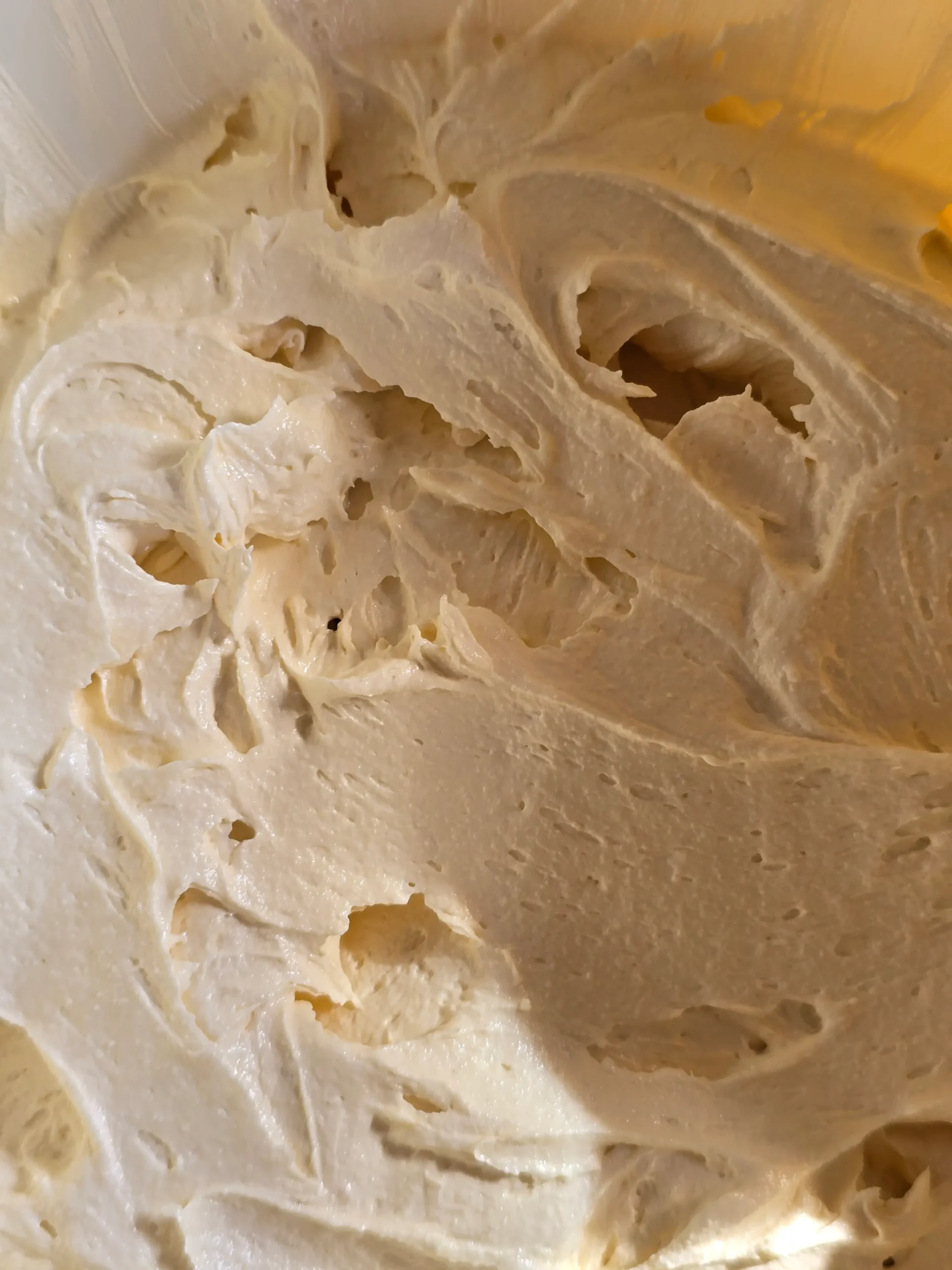
Buttercream may seem simple — just butter and icing sugar — but mastering it is all about the right balance. This buttercream frosting recipe will show you how to achieve the perfect texture, sweetness, and stability, whether you’re piping delicate swirls on cupcakes or spreading it across a layered cake. Beginners often over-sweet or under-whip, which is why understanding ratios is key to consistent results.
Here’s a quick guide:
| Ratio (Butter : Sugar) | Sweetness Level | Texture & Stability | Best Uses |
| 1:1 (e.g. 125g : 125g) | Moderate | Smooth, pipeable | Cupcakes, layer cakes |
| 1:2 (e.g. 125g : 250g) | High | Stiff, stable | Decorative piping, hot weather |
| 2:1 (e.g. 200g : 100g) | Low | Very soft, less stable | Light fillings, whipped-style frostings |
While all three ratios work depending on your goals, our go-to is the 1:1 ratio. It’s creamy without being overpoweringly sweet, stable enough to pipe, and the perfect foundation for adding flavors or colors. Once you’ve mastered this buttercream frosting recipe, you can experiment with chocolate, coffee, fruit purées, or natural food coloring — just adjust slightly to maintain the ideal texture.
Vanilla Buttercream Frosting
Ingredients
- 125 g unsalted butter softened
- 125 g icing sugar powdered sugar, sifted
- 1 tsp vanilla extract
Instructions
- Cream the butter – Place softened butter in a bowl and beat until pale, fluffy, and smooth. [The butter should turn almost white]
- Add the sugar – Sift icing sugar into the bowl, half at a time, mixing on low speed until fully incorporated.
- Flavor – Stir in vanilla extract and continue beating until light and airy.
- Adjust consistency – If the frosting is too stiff, add 1 tsp milk at a time; if too soft, add a little more icing sugar.
Notes
- Liquid Food Coloring → Adds extra liquid, which can thin out the frosting. Use sparingly, and if the frosting feels too soft, beat in 1–2 tbsp extra icing sugar to bring it back to pipeable consistency. For more vibrant shades without changing texture, gel or powder colors are the better choice.
- Fruit Purées → Fresh fruit adds flavor and natural color but also introduces water. Start with 1–2 tbsp purée at a time, and balance it with extra icing sugar if the buttercream becomes too loose. Alternatively, use freeze-dried fruit powder for bold flavor without thinning.
- Cocoa Powder (for chocolate buttercream) → Since cocoa is a dry ingredient, it thickens the frosting slightly and tones down sweetness. You may need 1–2 tsp milk or cream to loosen it back to a spreadable consistency.
- Extracts & Flavors → Vanilla is classic, but almond, lemon, or coffee extracts can completely change the profile. Always add extracts after the sugar is fully incorporated, so they blend smoothly.
Did you make this recipe?
Please let us know how it turned out for you! Leave a comment below.